


Buying new construction homes in Florida as a foreigner starts with three connected questions: whether you’re eligible to buy, whether the contract protects your interests, and whether the location and ownership plan fit your needs. A polished model home is only one part of the decision. The project stage, funding, and property-specific restrictions matter too.
If you’re buying from abroad, you may have questions about assessing a developer, understanding contract terms, and managing the transaction remotely. This guide walks through the process, from setting your priorities to closing, and offers practical criteria for comparing new construction with resale homes.
You’ll also find Florida-specific considerations, including foreign-buyer restrictions, financing, ownership structure, taxes, and ongoing costs. Konradian supports international buyers with property selection and legal and financial transaction support through to key handover. A clear process can help you assess opportunities and identify the questions that need professional review.
Key Takeaways
- Before buying new construction homes in Florida as a foreigner, assess your eligibility and the requirements that apply to your circumstances.
- Set your intended use, preferred area, purchase horizon, and funding approach before narrowing your search.
- Compare new builds and resale homes by timeline, customization, condition, contract terms, and readiness for use.
- Review a project in sequence: location, developer, documents, contract, inspections, and closing requirements.
- A consistent project comparison and coordinated transaction support can help turn a remote search into informed next steps.
Buying a New Construction Home in Florida as a Foreigner: What to Know First
A newly built Florida home may offer modern layouts, a choice of finishes in some developments, and the appeal of owning property in an international destination. Buying from abroad raises practical questions: Can you purchase, what restrictions apply, and how can you assess a home you may not be able to visit often? The answers depend on your circumstances and the project stage. Buying new construction homes in Florida as a foreigner calls for early checks on eligibility, ownership plans, financing, and contract terms. Don’t assume every purchase follows the same path.
At the federal level, there is generally no blanket prohibition on non-US citizens owning US real estate. Florida law adds important restrictions for certain foreign principals under Senate Bill 264, with rules that vary by country and property type. The law also requires foreign buyers to sign a closing affidavit attesting to compliance. Nationality, domicile, visa status, property location, and ownership structure may affect how the rules apply. Have a Florida real estate attorney assess your circumstances before you commit. This guide covers property acquisition, not immigration eligibility, tax advice, or guaranteed investment performance.
Can a foreigner buy a new home in Florida?
Often, yes, but eligibility isn’t automatic. Florida’s restrictions apply to certain people and entities connected to China, Russia, Iran, North Korea, Cuba, the Maduro regime in Venezuela, and Syria. The rules differ across these groups and include restrictions tied to agricultural land, military installations, and critical infrastructure. Some limited residential exceptions have specific conditions. Nationality alone may not settle the question, so seek legal review before signing or transferring funds.
Property ownership is separate from permission to live or work in the United States. Buying a home does not, by itself, grant a visa, residency, or employment authorization. Financing and ownership structure also shape the transaction: an individual purchase and an entity purchase may involve different legal, lender, and documentation considerations. For general context on the state framework, see this overview of Florida property law. Use it as background, not as a substitute for advice on current rules.
What makes new construction different from resale?
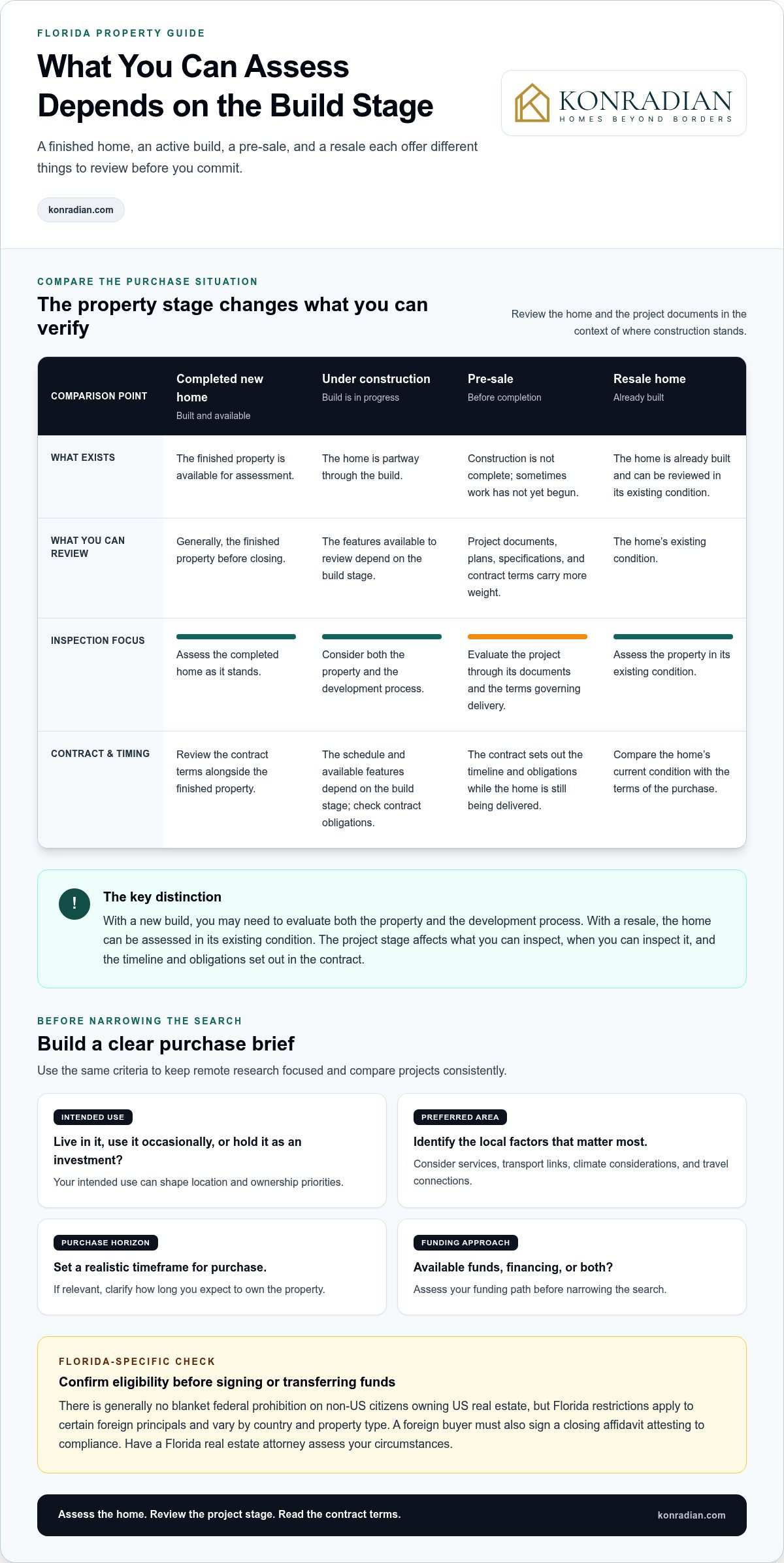
“New construction” can describe several different purchase situations. A completed new home is built and available for purchase, so you can generally assess the finished property before closing. A home under construction is partway through the build; the schedule and the features available to review depend on its stage. A pre-sale purchase happens before construction is complete, sometimes before work begins. In that case, you rely more heavily on project documents, plans, specifications, and contract terms.
The project stage affects what you can inspect, when you can inspect it, and the timeline and obligations set out in the contract. A resale home is already built and can be assessed in its existing condition. With a new build, you may need to evaluate both the property and the development process. The key question is whether you’re assessing a finished home or committing to one that is still being delivered.
Plan the Purchase: Financing, Ownership, and Florida-Specific Checks
Before comparing developments, decide what you need the property to do. A home for personal use may call for different location and ownership priorities than an investment purchase. A clear brief also keeps remote research focused and lets you compare projects on consistent terms.
- Intended use: Clarify whether you expect to live in the home, use it occasionally, or hold it as an investment.
- Preferred area: Identify the services, transport links, climate considerations, and travel connections that matter most.
- Purchase horizon: Set a realistic timeframe for purchase and, if relevant, how long you expect to own the property.
- Funding approach: Decide whether you plan to buy with available funds, explore financing, or assess both paths before narrowing your search.
For broader cross-border considerations, Konradian’s US real estate investment guide can help you frame the questions to resolve before moving from research to a shortlist.
How should an international buyer prepare financially?
A cash purchase and a financed purchase require different preparation. Cash buyers should be ready to document the source and movement of funds. If you’re exploring a mortgage, first establish whether your circumstances fit a lender’s criteria. Requirements vary between lenders and applicants, and US financing isn’t available to every foreign buyer.
Prepare a secure file with identity documents, evidence explaining the source of funds, and any records a lender or transaction professional requests. This may include financial or income documents, but the precise list depends on the transaction and institution. Confirm requirements early so document translation, certification, or international transfers don’t become last-minute obstacles.
Budget for more than the purchase amount. Closing expenses, insurance, property taxes, and ongoing ownership obligations vary by property and location. A tax adviser can explain how US and home-country rules interact. If you may later sell, understand FIRPTA withholding, which concerns withholding on dispositions of US real property interests, not a tax charged simply for buying. The IRS explains the federal framework; an adviser can address how it applies to your situation.
Which Florida location and ownership questions matter?
Compare locations with your intended use in mind. Consider access to everyday services and airports, travel time from your usual destinations, and local climate exposure. For a coastal home, consulting regional specialists like DeFeo Luxury Properties can provide valuable insight into Gulf Coast markets from Tampa to Sarasota, helping you evaluate exposure and insurance questions in the context of that specific property. Avoid relying on broad assumptions about Florida.
Property taxes and local requirements also vary by location. Review current county-level information for each property and seek professional guidance on how its use and ownership could affect your obligations. Most foreign buyers who don’t establish Florida permanent residency won’t qualify for the state’s homestead exemption, so confirm eligibility before including it in your budget.
Individual and entity ownership can involve different legal, estate-planning, financing, and tax considerations. Discuss the options with qualified legal and tax advisers before signing, rather than treating the ownership name as a closing detail. Once you’ve organized your priorities and funding questions, coordinated support for your US property search can help turn your brief into a considered shortlist.
New Construction vs. Resale in Florida: Compare the Real Trade-Offs
A new home may offer contemporary design and, depending on the project stage, a chance to select finishes. With a resale, you can see the finished property and its established surroundings. Neither option is automatically lower-risk, faster to acquire, or a stronger investment. For an international buyer, compare how readily you can assess the home remotely, understand the contract, and plan around the handover date.
Also distinguish a completed new home from a pre-construction purchase. You can view a completed property in its finished state. A pre-sale decision depends more heavily on plans, specifications, project information, and contract terms. The Miami Realtors International Sales Report offers a snapshot of international activity in South Florida’s new-construction market. Market activity alone, however, can’t establish whether a particular home suits your needs.
| Factor | New construction | Resale |
|---|---|---|
| Timeline | Completed homes may be closer to handover; homes still being built or sold pre-construction involve a delivery schedule that can change. | The property already exists, but the purchase still depends on contract milestones and closing arrangements. |
| Customization | Finish choices or changes may be possible at some stages, subject to the project and contract. | Buyers generally assess the home as it stands and plan any changes separately. |
| Condition assessment | A completed home can be viewed finished; an unfinished one offers fewer opportunities to assess completed work. | The existing condition is visible, though a viewing alone may not reveal every issue. |
| Contract structure | Terms may address construction, specifications, permitted changes, completion, and remedies. | Terms relate to the transfer of an existing property and its agreed condition. |
| Immediate usability | Depends on completion and handover status. | Depends on the home’s condition and the agreed possession arrangements. |
When might a new-build home fit better than resale?
A new build may suit you if contemporary layouts, new finishes, or a developing community align with your plans. If construction is at an early stage, you may have more opportunity to choose finishes, but customization isn’t guaranteed and depends on the contract and build schedule. A completed development offers a different advantage: you can assess the home as finished, although choices made during construction may no longer be available.
What should buyers weigh against the appeal of a new home?
A developing neighbourhood may not yet offer the established services or everyday access of a mature area. Consider how the surrounding community fits your intended use, not just how the home looks on a plan. Read the contract for completion terms, specifications, limits on changes, and remedies if obligations aren’t met. Arrange independent inspections at appropriate stages where access and the contract allow, and have relevant professionals review the process and local requirements. Even if you are comparing markets across the US, speaking with a licensed real estate specialist such as Christopher Seim can offer practical insight into weighing new-build perks against established resale neighborhoods.
The better fit depends on your timing, contract terms, and intended use, not simply on whether the home is new or resale. If you’re buying new construction homes in Florida as a foreigner, weighing these factors together is more useful than judging either option by appearance alone.
Evaluate a Florida New-Build Project Before You Commit
A remote purchase benefits from a repeatable due-diligence process. Don’t rely on a polished presentation or a single site visit. Assess the location, project, contract, and closing requirements as connected parts of the decision. Keep a dated record of documents received, questions raised, and answers provided so your advisers can review the same information before you sign.
- Assess the location. Compare the setting with your intended use, including access to services and transport. Review property-specific climate exposure and local conditions, and distinguish existing neighbourhood amenities from those still planned.
- Review the developer. Consider the developer’s track record and the status of this particular project. Request clear information about construction progress, expected delivery terms, and how updates or changes are documented. Previous work can offer context, but it doesn’t replace review of the current project.
- Collect project documents. Organize the plans, specifications, construction-status materials, disclosures, and documents describing community arrangements. Check applicable approvals, permits, and development records through the appropriate local sources. Requirements and record-access processes can vary, so verify the relevant county or municipal process.
- Read the contract closely. Have a qualified Florida real estate attorney review deposit terms, contingencies, deadlines, permitted changes, completion provisions, and default remedies before signing. Confirm that the written specifications match the home and finishes you believe you’re purchasing. For broader cross-border transaction planning, Konradian’s legal support guide for buying property abroad provides useful context.
- Plan inspections. Establish when independent inspections may be possible during construction and what access the contract allows. Tie inspection opportunities to relevant build milestones, then plan a thorough final walk-through before handover. Verify current inspection, contract, and local requirements for the specific property.
- Prepare for closing. Confirm the documents, funds, signatures, and identity or ownership records required for your transaction. Coordinate timing with your legal and financial advisers, especially if you’re signing or transferring funds from abroad. Resolve open questions before closing rather than assuming they can be addressed afterward.
Check Florida Building Code requirements, local permitting, and property-specific approvals against current authoritative sources and the project’s records. A general description of a development doesn’t prove that a particular home has the approvals or features relevant to your purchase. Review community declarations, association rules, budgets, and amenity details too, as these can shape both use and ongoing obligations.
Before signing, review the purchase contract, plans and specifications, project disclosures, permit and approval records, and community governing documents with qualified professionals. Keep documents in one shared folder and maintain a written question log. Circulate updated versions as answers arrive so reviewers can work from current information.
If you’re buying from abroad, coordinate your Florida property search and transaction support around these due-diligence steps, from evaluating opportunities through closing and key handover.
Buy a Florida New Construction Home with Coordinated International Support
Once you’ve clarified your intended use, compared new-build and resale options, and identified the documents that need careful review, turn that groundwork into a practical shortlist. Compare each project using the same criteria: location, construction stage, contract terms, funding plan, and fit with your ownership goals. This helps you focus on relevant opportunities instead of being guided by presentation alone.
How does end-to-end support simplify a cross-border purchase?
Buying from abroad can involve property research, developer information, transaction documents, and decisions across time zones. Konradian’s US property acquisition support starts with a consultation and property selection, helping translate your goals into a focused search. Direct relationships with developers and real estate agencies can also provide access to pre-sale opportunities to consider alongside other options.
As you assess a property, Konradian provides legal and financial transaction support through the purchase process and key handover. This coordination helps organize information and next steps, while legal and tax questions remain matters for qualified advisers. The service uses a seller- and developer-paid commission model. Konradian’s US support comes at no direct additional cost to buyers.
What are the next steps for a considered purchase?
Before an initial consultation, prepare a short brief. Include how you expect to use the property, the Florida locations you’re considering, your preferred purchase timing, and your funding approach. You don’t need every detail resolved. A clear starting point makes it easier to identify which opportunities deserve further review.
Then compare a focused shortlist against your priorities and the transaction requirements for each project. A side-by-side record can help you weigh:
- Location and use: How the area’s access, services, and setting align with your plans.
- Project stage: Whether the home is completed, under construction, or offered pre-sale, and what that means for assessment and timing.
- Documents and terms: What the project materials and contract say about specifications, delivery, changes, and obligations.
- Purchase readiness: Which eligibility, ownership, financing, and closing questions still need professional review.
Keep the comparison grounded in documented information. If a project’s appeal rests on planned amenities or future completion, record those as items to assess against project materials and contract terms rather than treating them as already delivered. This helps distinguish a suitable opportunity from an attractive but uncertain one.
Buying new construction homes in Florida as a foreigner becomes more manageable when the search and transaction steps are organized around clear priorities. Explore US property opportunities with Konradian and begin with a considered brief for your search.
Make Your Next Move with Clarity
Buying new construction homes in Florida as a foreigner is best approached as a sequence of considered choices, not a race to reserve a property. Turn your priorities into a brief, then compare opportunities against it. This keeps the focus on fit, documentation, and a purchase plan you can stand behind, even when coordinating from another country. A clear brief also gives advisers and transaction partners a practical starting point.
Konradian supports US property acquisition from consultation and selection through transaction support and key handover. Direct relationships with developers and real estate agencies can bring pre-sale opportunities into the conversation. Under its seller- and developer-paid commission model, Konradian’s US support comes at no direct additional cost to buyers. Legal and financial transaction support helps coordinate the process alongside guidance from your own qualified legal and tax professionals where needed.
Start with the questions that matter most to your plans. Explore US property opportunities with Konradian and take the next step toward a carefully considered purchase.
Frequently Asked Questions
Can a foreigner buy a newly built home in Florida?
Yes, foreign nationals can generally buy US real estate, but Florida restrictions apply to certain foreign principals and properties. Eligibility can depend on factors such as nationality, domicile, visa status, property location, and ownership structure. Before making an offer, have a qualified Florida real estate attorney review your circumstances and the current rules. Buying new construction homes in Florida as a foreigner is possible, but don’t assume every buyer or property qualifies.
Do I need to live in the United States to buy a Florida home?
No, you generally don’t need to live in the United States to purchase property there. However, ownership doesn’t grant permission to enter, reside, or work in the country. Those questions are governed by separate immigration rules. If you plan to travel for a viewing, signing, or handover, consider your travel documents and timing separately from the purchase. Clarify with the closing team how required signatures will be completed from abroad.
Can a foreign buyer get a mortgage for a Florida new-build home?
Possibly, but US mortgage financing isn’t available to every foreign buyer, and lender requirements vary. A lender may assess your income, assets, credit history, source of funds, and the property itself. Before relying on financing, establish what documentation the lender needs and whether the development’s construction stage affects its review. Keep a cash-purchase option and any financing conditions in view when considering contract deadlines.
What documents may a foreign buyer need to purchase property in Florida?
Expect to provide identity documents and information supporting the ownership and payment arrangements. A transaction team or lender may also request evidence of the source of funds, financial records, ownership-entity documents, or tax identification details, depending on your situation. Requirements vary by institution and transaction. Ask for the applicable document list early, and allow time to arrange certified copies or translations if requested.
What should I check in a Florida new-construction contract before signing?
Review how the contract defines the home, included features, deposits, payment milestones, completion estimates, permitted changes, and procedures for delays or default. Check whether it specifies inspection access, walk-through arrangements, and how unresolved defects are handled. Read documents covering community or association obligations as well. Have a qualified Florida real estate attorney explain deadlines, contingencies, and remedies before you sign or pay a deposit.
Are property taxes different for new construction in Florida?
Property taxes depend on assessed value and local tax rates, not simply on whether a home is new. For a newly completed property, ask how its assessment will be established and verify current figures with the county property appraiser. Don’t assume a previous owner’s tax bill predicts yours. Homestead benefits have eligibility requirements, so confirm your status with the relevant county office before including an exemption in your budget.
Can I buy a Florida new-build home remotely from another country?
Yes, some international buyers complete much of the purchase remotely, although signing and identity-verification processes depend on the closing arrangements. Confirm early how documents must be signed, witnessed, notarized, or delivered, and whether original paperwork is needed. For a home under construction, organize progress updates and independent inspection access through the contract process. Keep a secure record of signed documents, deadlines, and written project communications.
What happens if a Florida new-construction project is delayed?
Your options depend on the contract, the reason for the delay, and applicable law. Review the completion provisions, notice requirements, extension rights, and remedies rather than relying on a verbal estimate. If the schedule changes, keep written notices and communications, record revised milestones, and have your attorney explain the effect on your deposit, financing timeline, and ability to cancel. Don’t assume every delay automatically permits withdrawal or compensation.