


When sending money for a property abroad, one of the most important checks is whether the payment instructions are genuine. It’s natural to worry about sending a large sum to the wrong account, losing value to exchange-rate changes, or having funds arrive after a deadline. A clear plan for how to safely transfer money for property purchase abroad starts with verifying the details and allowing time for the payment to arrive.
This guide explains how to authenticate payment instructions, compare banks and specialist transfer providers, and weigh exchange rates, charges, and processing times. It also covers how to coordinate documentation and payment dates with the people involved in your purchase, while confirming current requirements with qualified professionals in the relevant jurisdictions.
From independently verifying the recipient’s account details to allowing for processing time and possible intermediary deductions, each step can reduce avoidable uncertainty. Konradian supports international buyers through the wider transaction, from property selection and legal and financial advice to key handover, helping organize the purchase journey.
Key Takeaways
- Learn how to safely transfer money for property purchase abroad by treating recipient identity, payment instructions, timing, and receipt confirmation as connected checks.
- Compare banks, currency-transfer providers, and brokers by looking beyond headline fees to exchange-rate transparency, transfer limits, timing, and support.
- Use a pause-and-verify checklist before authorizing a payment, especially if bank details change. Confirm changes through a previously trusted contact channel.
- Coordinate the payment schedule with the transaction and prepare identity or source-of-funds documents requested by relevant institutions.
- See how coordinated property, legal, and financial support can help organize the purchase journey, while keeping payment decisions carefully verified.
How to Safely Transfer Money for a Property Purchase Abroad: Start with the Risks
A large overseas property payment calls for a deliberate process, not a rushed decision. Funds may need to move across currencies, banking systems, and time zones while meeting a contractual deadline. Safety means more than choosing a transfer method. Confirm who should receive the money, authenticate the instructions, allow for processing time and currency movement, and check that the payment arrived as intended.
Before sending property funds, verify the recipient, authenticate the instructions, plan for timing and exchange-rate movement, and confirm receipt. These four checks provide a practical framework for how to safely transfer money for property purchase abroad. They also help separate concerns that can feel connected but need different safeguards.
Which risks deserve attention before an international property payment?
Transfer fraud can begin with an impersonation or a compromised email account. A message may appear to come from a solicitor, agent, or seller and provide altered account details, sometimes just before a payment is due. Treat any change to payment instructions as a reason to pause. Verify it through a contact channel you already trust, rather than replying to the message or calling a number included in it.
Other risks are operational or financial, not necessarily signs of fraud. Processing steps, cut-off times, or intermediary banks can delay a transfer. Separately, an exchange-rate change between budgeting and conversion can affect the amount of destination currency received. Institutions may also request information about the payment or the source of funds. Requirements depend on the transaction and the jurisdictions involved.
A wire transfer is one common way to move funds between financial institutions, but the transfer method itself doesn’t confirm that recipient details are genuine or guarantee arrival by a particular date. Use the right safeguards: verify details independently, allow for processing time, and keep relevant records.
Why the destination country and transaction stage matter
Payment procedures and documentation can vary between countries, institutions, and individual transactions. The sequence may include a reservation payment, deposit, completion balance, or another contractual milestone, but not every purchase follows the same structure. In major international property markets such as the UAE, agencies like Golden Bricks Real Estate help foreign buyers navigate local milestone requirements and escrow protections. The purchase documents and transaction professionals should clarify which payment is due, to whom, in what currency, and by what date.
Timing matters at each stage. Sending too early may leave funds waiting before they are needed; sending too late can create pressure around a deadline. Have the qualified professionals involved in the transaction explain the payment schedule and any documentation expectations. Confirm current transfer, reporting, and documentation requirements with appropriately qualified professionals in both the buyer’s jurisdiction and the destination country.
Keep the payment plan aligned with the transaction as it develops. If a milestone, recipient, or deadline changes, verify the change through a trusted channel and update your records before authorizing funds. This helps distinguish a legitimate update from an unverified instruction and gives you a clearer basis for comparing transfer routes.
Compare Bank Transfers, Currency Providers, and Brokers for Overseas Property
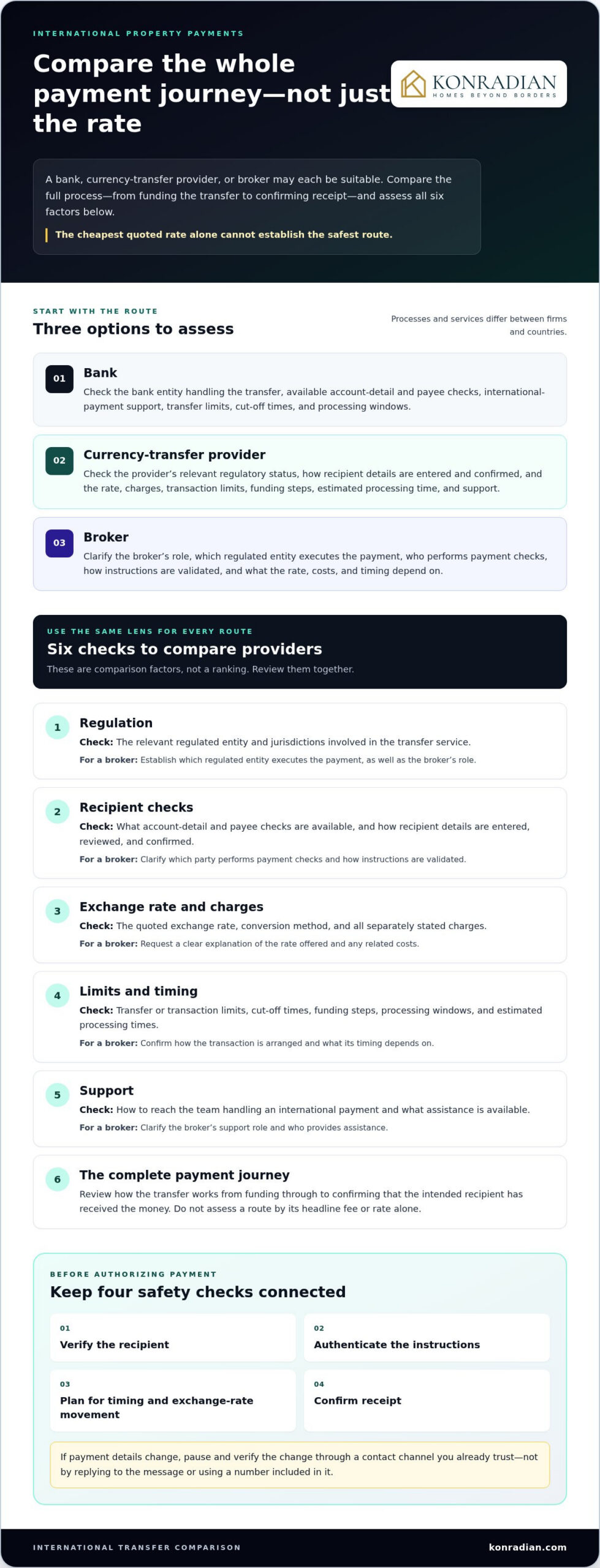
Once you understand the risks, compare transfer routes against the needs of your transaction. A bank, currency-transfer provider, or broker may each be suitable, but their processes and services differ between firms and countries. Review the entire payment journey, from funding the transfer to confirming that the intended recipient has received the money.
The cheapest quoted rate alone cannot establish the safest route. Consider the provider’s regulatory status, payment checks, transparency, limits, timing, and support together.
| Consideration | Bank | Currency-transfer provider | Broker |
|---|---|---|---|
| Regulation | Check the bank entity handling the transfer and the jurisdictions involved. | Confirm the provider’s relevant regulatory status for the service and countries. | Establish which regulated entity executes the payment, as well as the broker’s role. |
| Recipient checks | Review what account-detail and payee checks are available before authorization. | Check how recipient details are entered, reviewed, and confirmed. | Clarify which party performs payment checks and how instructions are validated. |
| Rate and charges | Compare the quoted exchange rate with separately disclosed charges. | Review the rate, conversion method, and all stated charges. | Request a clear explanation of the rate offered and any related costs. |
| Limits and timing | Check transfer limits, cut-off times, and processing windows. | Check transaction limits, funding steps, and estimated processing times. | Confirm how the transaction is arranged and what timing depends on. |
| Support | Understand how to reach the team handling an international payment. | Review available support channels and what assistance they cover. | Clarify the broker’s support role and who handles the actual transfer. |
What should you compare between international transfer providers?
Start by identifying the legal entity that will handle your funds. Review its regulatory status in the relevant jurisdictions using official registers where available. A familiar brand name doesn’t necessarily tell you which entity is responsible for a particular transfer. Compare the exchange rate you’ll receive with any separately disclosed charges, and ask how intermediary deductions, if applicable, could affect the amount delivered.
Then check whether the transfer limit covers the required payment, whether the provider requires funding or verification steps, and what processing windows apply. Support matters too. Know how to raise a query and which team can explain a delay or payment status.
When might a bank, broker, or specialist provider suit the transaction?
A bank may be convenient if you already use it and value managing the payment alongside existing accounts. A specialist provider may offer a different approach to exchange-rate presentation or online transfer steps—fintech platforms such as DUC App demonstrate how borderless payment methods continue to evolve. A broker may provide a more guided conversation about a currency transaction. These are broad distinctions, not guarantees. Services vary, and firms may overlap in what they provide.
Large payments may prompt additional checks or requests for documents, so build time into your plan rather than assuming an instant transfer. For how to safely transfer money for property purchase abroad, compare the complete process, not just the headline rate. Konradian’s property transaction support can help coordinate purchase decisions alongside legal and financial advice. Your chosen payment provider remains responsible for its transfer process.
How to Verify Property Payment Instructions and Prevent Transfer Fraud
A genuine-looking message can still contain false payment instructions. In property transactions, criminals may impersonate a solicitor, agent, seller, or another party, or interfere with an email conversation to substitute their own account details. A polished message, familiar name, or urgent explanation doesn’t prove that the instructions are authentic. Make verification a separate step before authorizing funds.
Independently confirm beneficiary details before authorizing a high-value transfer. For how to safely transfer money for property purchase abroad, use this sequence every time and repeat it whenever the recipient or account details change.
- Pause. Don’t act immediately on a new payment request or changed account details. Set aside the message and avoid using its links, phone numbers, or reply function to verify the request.
- Inspect. Compare the instructions with the transaction documents and previously confirmed details. Check the beneficiary name, account number, bank details, currency, and stated payment purpose. A small difference deserves attention.
- Independently verify. Call a previously established number or use a secure contact route you already trust. If you don’t have one, find contact details independently from reliable records, not from the message containing the new instructions.
- Confirm. Speak directly with the relevant transaction party. Ask them to confirm the beneficiary name and full account details, and whether any change was made. A reply from the same email thread isn’t independent confirmation.
- Authorize. Proceed only after the details match the transaction documents and your independent confirmation. Save a record of the verified instructions, the date, and who confirmed them.
How do you independently confirm a seller’s or transaction party’s bank details?
Use a contact route established before the payment request arrived, such as a previously used phone number or secure channel. Compare the beneficiary name and account details with the relevant transaction documents, rather than relying on a forwarded email or screenshot. If anything differs, stop and raise the discrepancy with the transaction party through that trusted route. Reassurance from the email address that sent the change doesn’t resolve an inconsistency.
What signs should make you pause a property payment?
Pause if bank details change close to a deadline, a message pressures you to act unusually quickly, the beneficiary name doesn’t match the documents, or you’re unexpectedly asked to split or redirect funds. These circumstances don’t prove fraud, but they call for fresh verification. Keep a dated record of the final instructions and who confirmed them, so the approved details are clear when you prepare the transfer.
After authorization, retain the transfer confirmation and follow the payment through to receipt using the agreed process. If you’ve already sent funds and then spot a discrepancy, contact your bank or transfer provider promptly through its established channels, and alert the relevant transaction professional. Quick, documented action helps those handling the payment understand what happened and consider appropriate next steps.
Prepare and Send the Transfer: A Practical Property-Payment Checklist
Once you’ve selected a payment route and independently verified the instructions, organize the transfer around the transaction schedule. A written checklist can help align the amount, currency, documentation, and expected arrival date. It also makes it easier to spot missing information before you authorize the payment. Requirements vary by institution, transaction, and jurisdiction, so confirm current expectations with the professionals involved.
How can you coordinate transfer timing with completion?
Start with the purchase documents and agreed payment schedule. Confirm the amount, currency, beneficiary, and deadline with the relevant transaction professional. Then compare the deadline with the transfer provider’s stated processing window, including funding steps, bank checks, weekends, public holidays, or intermediary stages that could affect timing. Don’t send money earlier than required without appropriate professional guidance.
- Confirm the payment milestone. Establish which amount is due, when it’s due, and how the transaction party will acknowledge receipt. Keep the payment date aligned with the contractual schedule rather than relying on an informal estimate.
- Review the transfer route. Check the account you’ll fund, the destination currency, applicable transaction limits, processing steps, and the provider’s estimate for the payment. Allow time for questions or checks. An estimated arrival time isn’t a guarantee.
- Prepare requested documents. Ask the relevant bank or provider what identity and source-of-funds information it needs for your transaction. Gather the requested documents in advance, and confirm current reporting or documentation requirements with appropriately qualified professionals in the buyer’s and destination jurisdictions.
- Authorize and monitor. Once the details and schedule are aligned, submit the payment and retain the confirmation. Follow the agreed process to establish whether the funds reached the intended recipient or transaction account.
Large cross-border payments can prompt additional questions from financial institutions. The information requested may depend on the transaction, the institution, and the jurisdictions involved. Respond accurately and promptly, but don’t assume that one buyer’s document checklist will apply to every purchase.
What records should you keep after sending the money?
Keep the final payment instructions, provider confirmation, transaction reference, and communications about the payment schedule and verification. Store them securely with your purchase records. Ask the relevant transaction professional or recipient to confirm that the funds reached the intended account, using the agreed communication process. Retain that confirmation alongside the transfer record for future banking, tax, or transaction questions.
A coordinated purchase process can keep the payment schedule connected to the wider transaction, from documentation through completion. Konradian supports buyers with property selection, legal and financial advice, and key handover. Arrange a free video call consultation to discuss how this support can help organize your purchase. *Services are free of charge for clients outside the UK and Croatia; standard fees apply in those markets.
Coordinate an Overseas Property Purchase with Konradian’s End-to-End Support
An international purchase involves more than choosing a property and arranging payment. Research, transaction decisions, professional advice, documentation, and handover all need to connect. Konradian supports buyers through this journey, helping organize the moving parts so decisions can be considered in context, including the timing and requirements of a property payment.
That support can help organize the purchase, but it doesn’t replace independent payment verification or guarantee a fraud-free transfer. Buyers should authenticate instructions directly and confirm current legal, financial, reporting, and documentation requirements with appropriately qualified professionals in the relevant jurisdictions.
What does end-to-end support cover during an international purchase?
Support begins with property selection and market research assistance, helping buyers assess opportunities in the context of their aims and the purchase process. As the transaction progresses, legal and financial advice can inform decisions and help clarify what needs attention at each stage. This coordination keeps the wider sequence in view, from early selection through transaction milestones to key handover.
For example, a buyer approaching a payment milestone can consider how the due date fits with the agreed transaction schedule and documentation process. Konradian supports and coordinates purchase decisions, but doesn’t replace the bank or transfer provider’s payment controls. For specialist guidance on the legal dimension, a guide to legal support when buying property abroad can help buyers understand questions to discuss with qualified professionals.
Each purchase has its own circumstances. Transaction support helps bring relevant decisions and professionals into a clearer sequence, while buyers remain responsible for authorizing payment only after verifying the beneficiary and instructions. It doesn’t guarantee protection against fraud, promise recovery of funds, or remove the need to follow the transfer provider’s process.
How to take the next step with confidence
A considered first conversation can help bring your plans into focus. Konradian offers a free video call consultation to discuss your purchase aims and the support that may be relevant across the transaction. The team brings more than five years of local market experience, and its members were educated at the London School of Economics.
Use the conversation to outline where you are in the purchase journey, what decisions are ahead, and how property selection, legal and financial advice, and handover fit together. This can give you a clearer view of the process as you approach each milestone, while you continue to verify payment details independently. *Services are free of charge for clients outside the UK and Croatia; standard fees apply in those markets.
Take Your Next Step with a Clearer Plan
An overseas purchase is a significant personal and financial decision. Bring your plans, questions, and transaction timeline into one considered conversation. Understanding the process can help you move forward deliberately, while payment instructions and transfer decisions still require careful verification.
Konradian brings more than five years of local market experience and a team educated at the London School of Economics. Client testimonials describe the team as professional, personal, and supportive from start to finish. This experience can help organize the wider purchase journey, but it doesn’t guarantee a fraud-free transfer or a particular outcome.
If you’re considering how to safely transfer money for property purchase abroad, arrange a free video call consultation to discuss your plans and the support that may fit your purchase.
Arrange your free video call consultation and take a thoughtful first step toward your overseas property plans.
Frequently Asked Questions
Is a bank transfer the safest way to pay for property abroad?
No. A bank transfer isn’t automatically the safest option for every overseas purchase. Banks may suit buyers who value an existing banking relationship and familiar support. Specialist providers may offer a more transfer-focused service, but safeguards vary by firm. For how to safely transfer money for property purchase abroad, compare the entity’s regulation in relevant jurisdictions, recipient-verification steps, payment controls, and support. Independently confirm beneficiary instructions, then assess the route against the transaction structure and destination.
Can an international property transfer be reversed after it is sent?
Sometimes, but cancellation or recall depends on the payment route, how quickly you act, the institution, and the circumstances. A request doesn’t guarantee that funds will return, especially if they’ve already reached another account. If you suspect an error or fraud, contact the sending bank or provider immediately through its established contact channel. Keep the transaction reference and relevant messages, and follow the institution’s instructions while it responds.
What documents might a bank ask for when transferring money for a property purchase abroad?
Financial institutions may request identity, source-of-funds, or purchase-related documents, but there isn’t a universal checklist. Depending on your circumstances, examples could include identification, purchase documentation, or records explaining how the funds were accumulated or received. Submit sensitive files only through a channel the institution identifies as secure. Before arranging the transfer, confirm document requirements directly with the relevant bank or provider, and check jurisdiction-specific questions with qualified professionals.
How long does it take to transfer money for an overseas property purchase?
There’s no reliable universal delivery time for an overseas property payment. Processing can depend on the provider, currencies, destination, route, internal checks, and the calendar, so transfers may follow different timelines. Ask your chosen institution for its current processing window and any cut-off times. Allow for weekends or additional checks, then align the expected arrival with the deadline confirmed by the transaction professionals.
Should I send a property deposit directly to the seller’s bank account?
Not automatically. The correct recipient depends on the purchase documents and local transaction arrangements; a seller’s personal account isn’t necessarily the designated payment destination. Follow the documented payment route, and before authorizing funds, confirm the beneficiary’s name and account details through a transaction contact you already trust. Verify the stated purpose and due date as well. If the documents and instructions conflict, pause and resolve the discrepancy with the relevant professionals first.
Can exchange-rate changes affect the amount received for an overseas property payment?
Yes. If the exchange rate changes between a quote and execution, the converted amount may differ. Provider pricing and the currency pair also affect the result. Compare the expected amount after disclosed charges, rather than looking only at the displayed rate. If considering a rate arrangement, read its terms, including how long a quote applies and what happens if you change or cancel the transfer. A quoted rate doesn’t guarantee a particular saving.
